Mildew, Algae and Salt on Carlsbad Walls: Questions Before Recoating
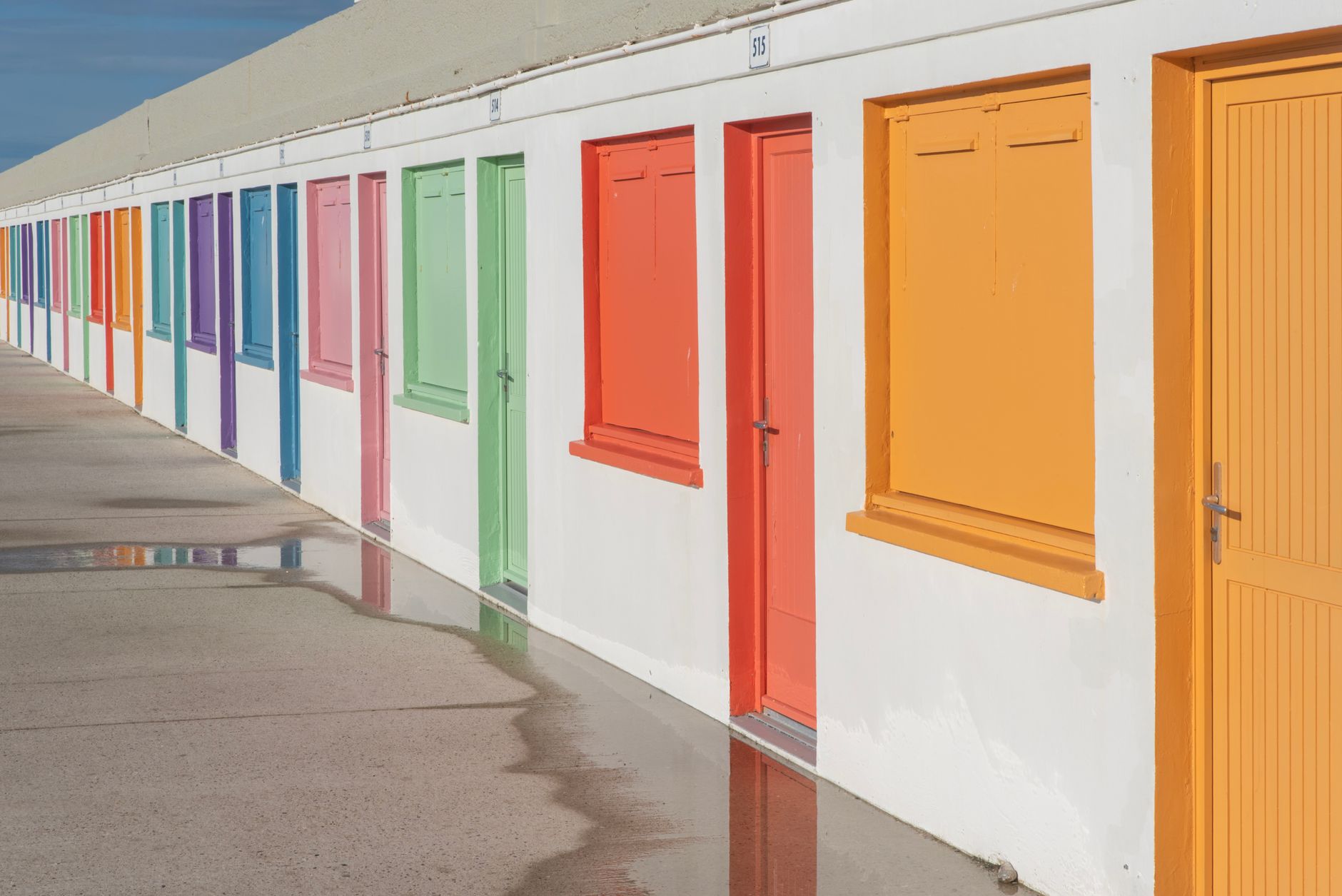
Winter rain and summer fog leave marks on Carlsbad walls that look like dirt but are not. Green film on the shaded side, white crust on block, a gray bloom on the stucco after the first cold snap. Each one needs a different fix, and each one decides whether a new coating bonds or flakes off within a year. The questions below are the ones that come up most before a wall is recoated.
Is the green on my shaded wall mildew or algae?
Usually algae, sometimes both. Algae is green or sometimes orange-brown, it grows where a wall stays damp for long stretches, and it is common on the north and east sides of homes near Agua Hedionda Lagoon and Buena Vista Lagoon. Mildew is a fungus, it looks black or gray in small dots or streaks, and it feeds on the paint film itself, so it shows up in corners, under eaves and behind shrubs where air does not move.
A quick test separates mildew from plain dirt. A drop of household bleach on the spot lightens mildew within a minute or two, while dirt stays the same color. That test is only for telling them apart, since the actual cleaning is done with a proper wash and a rinse, not by dabbing.
Can paint be put straight over algae?
No. A film applied over living growth fails in a pattern that is easy to recognize: the new paint looks fine for a season, then discolors in the same patches, and eventually peels in sheets where the growth lifted it from below. The growth has to be killed and removed first, then the wall rinsed and left to dry.
Most crews wash with a diluted cleaner made for exterior surfaces, let it work for the time the label gives, and rinse with low pressure water. Stucco and block do not take a hard pressure wash well, because a narrow jet can erode the surface and push water deep into hairline cracks. A gentle rinse that carries off the loosened growth does the job without the damage.
What is the white crust on my block wall?
That is efflorescence, a salt deposit. Water moves through the concrete block, dissolves minerals inside it, and leaves them on the face as it evaporates. In Carlsbad it appears most often on garden walls where a sprinkler hits the base, on retaining walls with no drainage behind them and on any wall where soil is piled against the foot.
Brushing it off dry with a stiff brush takes away the loose crystals. The wall is then washed, allowed to dry for several days, and watched. If the crust comes back, the water source is still active, and a coating on top will be pushed off by the next round of salts. Fixing the sprinkler angle, regrading the soil or adding drainage comes before any paint.
Does winter rain in Carlsbad cause damage that needs repair first?
The rain is concentrated in the winter months and comes in storms rather than steady drizzle, so water gets pushed sideways into walls and roof edges. After a wet season, a few things show up. Hairline stucco cracks open slightly. Caulk at window frames and trim joints pulls loose or splits. Fascia boards that were already soft take on water and swell.
A walk around the house with a screwdriver and a bright light finds most of it. Pressing the tip into the lower edge of fascia boards and the bottom of window sills shows soft wood. Running a thumbnail along caulk lines shows where the bead has lost its grip. Those repairs, along with spot priming of any bare patch, happen before the topcoat, because a coating laid over a wet or failed joint seals the problem in.
How long should a wall dry before painting?
Longer than people expect. A stucco wall that was rained on or washed can feel dry to the hand on the surface and still hold moisture a short way in. In the dry, sunny stretch of the year that moisture leaves within a couple of days. In cool, foggy weather, it can take noticeably longer, and a wall on the shaded side of the house may need more time than the sunny side.
A cheap moisture meter gives a reading on wood and some masonry. Without one, a simple check is to tape a square of clear plastic onto the wall in the morning and look at it in the afternoon. Fog on the inside of the plastic means moisture is still coming out of the wall and the coating should wait.
What does marine fog do to a freshly painted wall?
Summer fog sets in during the late evening and often burns off by late morning. Paint applied late in the day can pick up condensation before it has cured, which leaves a dull, blotchy surface and sometimes tiny spotting on the film. Most crews finish painting early enough in the afternoon for the surface to set before the air cools and the dew point is reached.
The reverse problem happens with the sun. A wall in full afternoon sun dries the paint too fast, which causes lap marks and poor adhesion. The workable window is often the middle of the day for shaded faces and the morning for sunny ones, which is why crews move around a house through the day instead of finishing one side at a time.
Why does the salt film on the stucco matter?
Close to Carlsbad State Beach, the ocean air leaves a fine film of salt on every exterior surface. It is invisible, but it attracts moisture, and a coating applied over it can blister because the salt draws water through the film. A low pressure rinse with plain fresh water, followed by drying time, removes it. It matters most on metal rails, hardware and gate frames, but stucco and trim near the water pick it up too.
Is chalking the same as dirt?
No. Chalking is the sun breaking down the binder in an old paint film, so the pigment sits loose on the surface as a powder. Dragging a dark cloth across the wall shows it as a pale smear. Dirt rinses off and chalk keeps coming back with each touch. A chalky wall needs washing, then a binding primer, because a topcoat over powder bonds to the powder and not to the wall. This shows up most on south and west walls, where the sun is hardest.
What order does the prep follow?
The sequence is the same on most coastal jobs, and the order matters more than the product choices.
- Probe and inspect the wood, caulk and cracks, and mark the repairs.
- Wash the walls to remove growth, chalk and salt, then rinse with fresh water.
- Let everything dry for as long as the weather and the wall demand.
- Scrape loose paint, wire brush any rust, and sand rough edges smooth.
- Patch cracks and holes, caulk the joints, and spot prime every repair.
- Apply two coats of the topcoat, cutting in the trim before rolling or spraying the walls.
Skipping the wash or the drying time is the common shortcut, and it is the step that most often explains a coating that failed early.
How often should the walls be rinsed afterward?
A yearly rinse with a garden hose removes the salt film and the first dusting of growth before it takes hold. Shaded walls near the lagoons benefit from a second look in late winter, after the damp months. A soft brush and plain water are enough for most walls, and a mild cleaner handles the rest. Keeping the surface clean and the drainage clear is the cheapest way to extend the life of the coating.
A wall that is washed, dried and sealed in the right order holds its finish for years, and one that is painted over its problems returns to them.