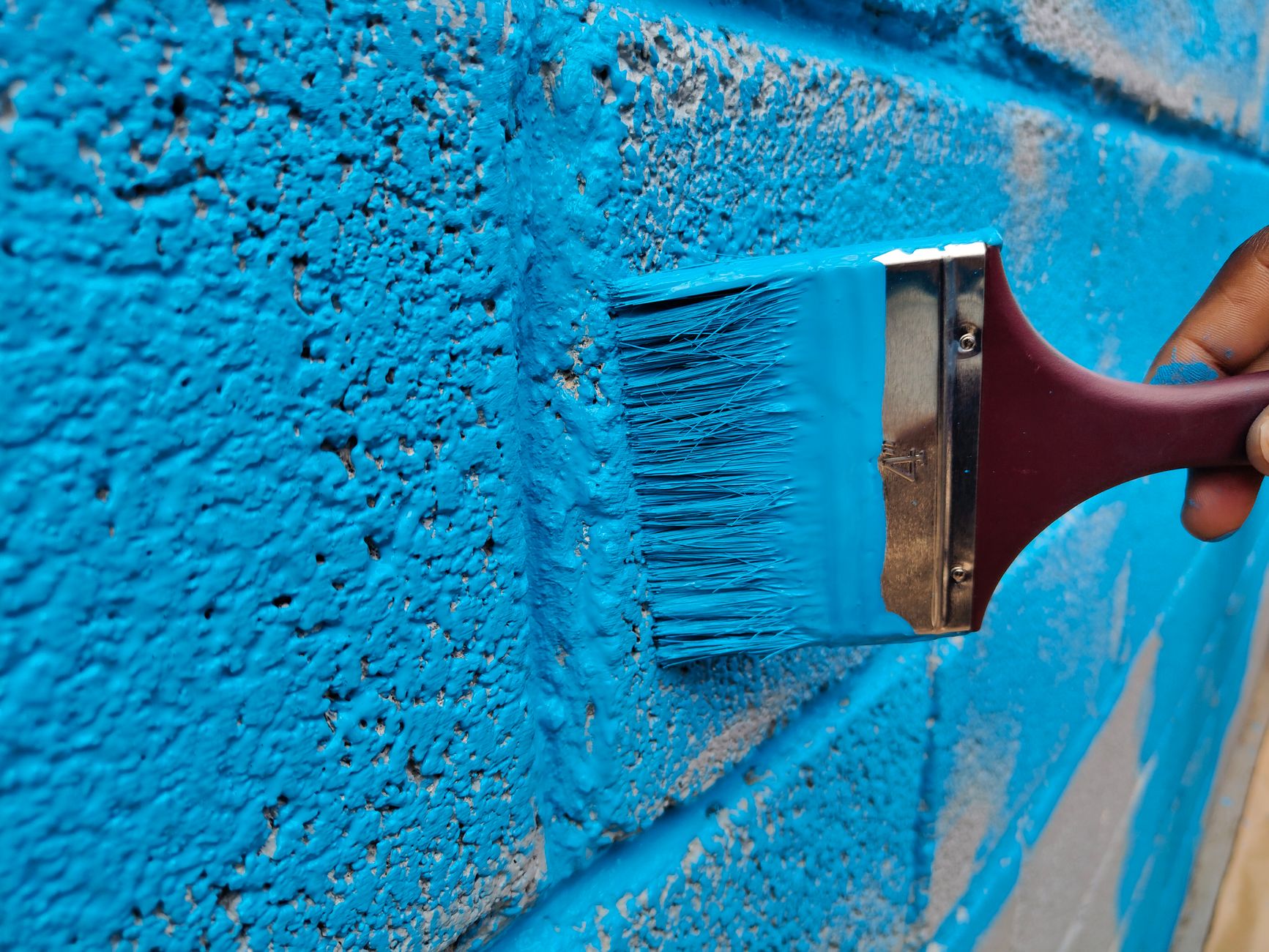
Exterior Painting in Carlsbad, CA
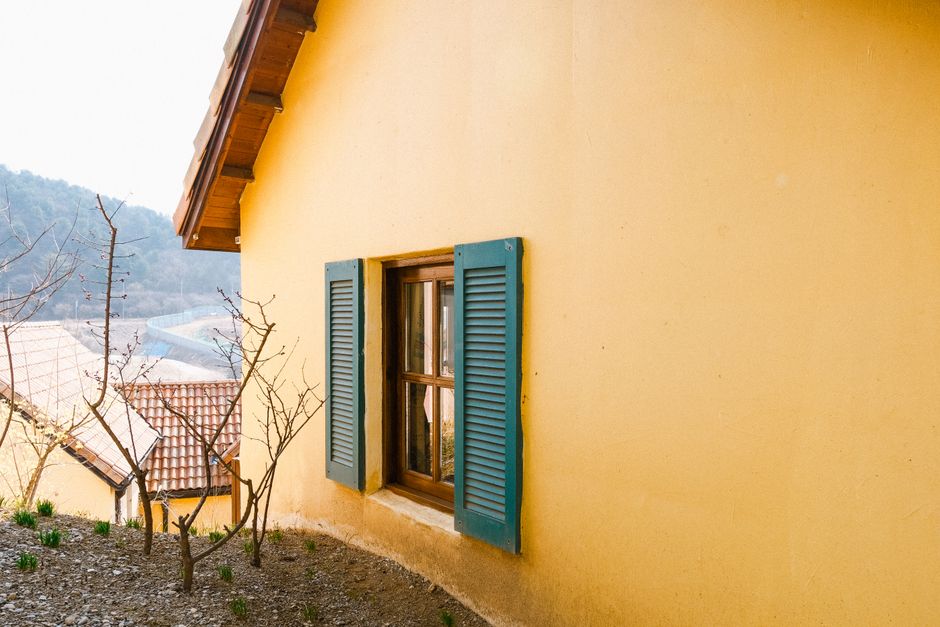
Notes on exterior painting in Carlsbad, CA, from coating stucco and block walls to treating rust and fading in coastal sun and fog.
What We Cover
- How Block Walls and Garden Walls Get Coated The steps for coating concrete block walls and garden walls in Carlsbad, from efflorescence to the masonry filler coat.
- Is Elastomeric Coating the Right Choice for Carlsbad Stucco How elastomeric coatings behave on stucco walls in Carlsbad and when a standard exterior paint is the better fit.
- Why the South and West Walls Fade Faster What the strong sun on south and west walls does to exterior colour in Carlsbad and how colour retention is improved.
- Why Fascia and Rafter Tails Fail First in Coastal Fog Why fascia boards and rafter tails break down before the walls do near the Carlsbad coast, and how the coating gets repaired.
- Matching Coatings to 1950s Cottages and Newer Homes How the coating system changes between 1950s Olde Carlsbad cottages, 1960s ranch homes and newer Aviara and La Costa stucco.
- Stopping Rust on Railings and Hardware in Salt Air How rust on metal railings, gates and hardware near Carlsbad State Beach is treated so a new coating holds.
Exterior Painting in Carlsbad, CA
Exterior painting in Carlsbad, CA is mostly a question of what the coast does to a coating. Salt, summer fog off the Pacific and a long run of sunny days all work on the same walls, rails and roof edges, and a paint job is judged by how those surfaces look a few seasons later.
Coatings on stucco and block
Most homes here are stucco, from the older ranch houses near Calavera Hills to the newer master-planned streets of Aviara, La Costa and Bressi Ranch. Hairline cracks, chalking and fading on the south and west walls decide whether a flexible elastomeric coating or a standard acrylic is the right call. Block walls and garden walls need their own filler coat, because raw block swallows ordinary paint.
Metal, wood and the roof edge
Near Carlsbad State Beach and the lagoons, salt air attacks railings, gates and hardware first. Rust gets removed or converted, then primed, before any enamel goes on. Fascia boards and rafter tails on the 1950s cottages in Olde Carlsbad take the fog and the sun together, so they are probed, repaired and sealed on the end grain.
How the crews work
Good exterior work follows a fixed order: wash, scrape, patch, caulk, spot prime, then two coats. Weather sets the schedule. Winter rain is concentrated in a few months, so the dry stretch of the year carries most of the repainting, and walls are worked around the sun so paint does not flash dry on a hot face.
Guides
The pages here cover elastomeric coating on stucco, roof edge repair, rust treatment on metalwork, colour retention on sunny walls, masonry coating for block walls, and how the coating changes with the age of the house.
Latest Guides
Mildew, Algae and Salt on Carlsbad Walls: Questions Before Recoating
Winter rain and summer fog leave marks on Carlsbad walls that look like dirt but are not. Green film on the shaded side, white crust on block, a gray bloom on the stucco after the first cold snap. Each one needs a different fix, and each one decides whether a new coating bonds or flakes off within a year. The questions below are the ones that come up most before a wall is recoated.
Is the green on my shaded wall mildew or algae?
Usually algae, sometimes both. Algae is green or sometimes orange-brown, it grows where a wall stays damp for long stretches, and it is common on the north and east sides of homes near Agua Hedionda Lagoon and Buena Vista Lagoon. Mildew is a fungus, it looks black or gray in small dots or streaks, and it feeds on the paint film itself, so it shows up in corners, under eaves and behind shrubs where air does not move.
A quick test separates mildew from plain dirt. A drop of household bleach on the spot lightens mildew within a minute or two, while dirt stays the same color. That test is only for telling them apart, since the actual cleaning is done with a proper wash and a rinse, not by dabbing.
Can paint be put straight over algae?
No. A film applied over living growth fails in a pattern that is easy to recognize: the new paint looks fine for a season, then discolors in the same patches, and eventually peels in sheets where the growth lifted it from below. The growth has to be killed and removed first, then the wall rinsed and left to dry.
Most crews wash with a diluted cleaner made for exterior surfaces, let it work for the time the label gives, and rinse with low pressure water. Stucco and block do not take a hard pressure wash well, because a narrow jet can erode the surface and push water deep into hairline cracks. A gentle rinse that carries off the loosened growth does the job without the damage.
What is the white crust on my block wall?
That is efflorescence, a salt deposit. Water moves through the concrete block, dissolves minerals inside it, and leaves them on the face as it evaporates. In Carlsbad it appears most often on garden walls where a sprinkler hits the base, on retaining walls with no drainage behind them and on any wall where soil is piled against the foot.
Brushing it off dry with a stiff brush takes away the loose crystals. The wall is then washed, allowed to dry for several days, and watched. If the crust comes back, the water source is still active, and a coating on top will be pushed off by the next round of salts. Fixing the sprinkler angle, regrading the soil or adding drainage comes before any paint.
Does winter rain in Carlsbad cause damage that needs repair first?
The rain is concentrated in the winter months and comes in storms rather than steady drizzle, so water gets pushed sideways into walls and roof edges. After a wet season, a few things show up. Hairline stucco cracks open slightly. Caulk at window frames and trim joints pulls loose or splits. Fascia boards that were already soft take on water and swell.
A walk around the house with a screwdriver and a bright light finds most of it. Pressing the tip into the lower edge of fascia boards and the bottom of window sills shows soft wood. Running a thumbnail along caulk lines shows where the bead has lost its grip. Those repairs, along with spot priming of any bare patch, happen before the topcoat, because a coating laid over a wet or failed joint seals the problem in.
How long should a wall dry before painting?
Longer than people expect. A stucco wall that was rained on or washed can feel dry to the hand on the surface and still hold moisture a short way in. In the dry, sunny stretch of the year that moisture leaves within a couple of days. In cool, foggy weather, it can take noticeably longer, and a wall on the shaded side of the house may need more time than the sunny side.
A cheap moisture meter gives a reading on wood and some masonry. Without one, a simple check is to tape a square of clear plastic onto the wall in the morning and look at it in the afternoon. Fog on the inside of the plastic means moisture is still coming out of the wall and the coating should wait.
What does marine fog do to a freshly painted wall?
Summer fog sets in during the late evening and often burns off by late morning. Paint applied late in the day can pick up condensation before it has cured, which leaves a dull, blotchy surface and sometimes tiny spotting on the film. Most crews finish painting early enough in the afternoon for the surface to set before the air cools and the dew point is reached.
The reverse problem happens with the sun. A wall in full afternoon sun dries the paint too fast, which causes lap marks and poor adhesion. The workable window is often the middle of the day for shaded faces and the morning for sunny ones, which is why crews move around a house through the day instead of finishing one side at a time.
Why does the salt film on the stucco matter?
Close to Carlsbad State Beach, the ocean air leaves a fine film of salt on every exterior surface. It is invisible, but it attracts moisture, and a coating applied over it can blister because the salt draws water through the film. A low pressure rinse with plain fresh water, followed by drying time, removes it. It matters most on metal rails, hardware and gate frames, but stucco and trim near the water pick it up too.
Is chalking the same as dirt?
No. Chalking is the sun breaking down the binder in an old paint film, so the pigment sits loose on the surface as a powder. Dragging a dark cloth across the wall shows it as a pale smear. Dirt rinses off and chalk keeps coming back with each touch. A chalky wall needs washing, then a binding primer, because a topcoat over powder bonds to the powder and not to the wall. This shows up most on south and west walls, where the sun is hardest.
What order does the prep follow?
The sequence is the same on most coastal jobs, and the order matters more than the product choices.
- Probe and inspect the wood, caulk and cracks, and mark the repairs.
- Wash the walls to remove growth, chalk and salt, then rinse with fresh water.
- Let everything dry for as long as the weather and the wall demand.
- Scrape loose paint, wire brush any rust, and sand rough edges smooth.
- Patch cracks and holes, caulk the joints, and spot prime every repair.
- Apply two coats of the topcoat, cutting in the trim before rolling or spraying the walls.
Skipping the wash or the drying time is the common shortcut, and it is the step that most often explains a coating that failed early.
How often should the walls be rinsed afterward?
A yearly rinse with a garden hose removes the salt film and the first dusting of growth before it takes hold. Shaded walls near the lagoons benefit from a second look in late winter, after the damp months. A soft brush and plain water are enough for most walls, and a mild cleaner handles the rest. Keeping the surface clean and the drainage clear is the cheapest way to extend the life of the coating.
A wall that is washed, dried and sealed in the right order holds its finish for years, and one that is painted over its problems returns to them.
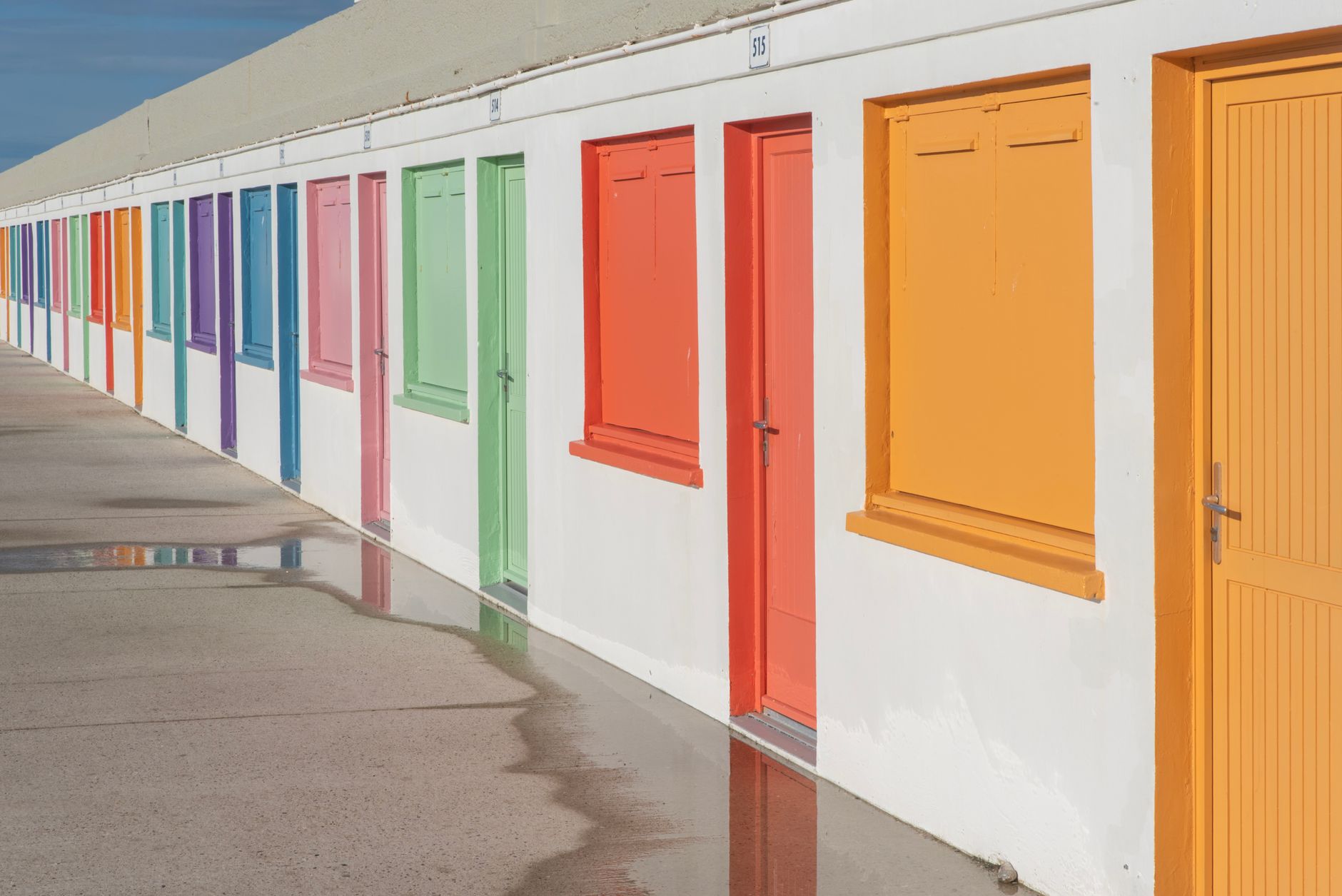
Which Sheen Works Where on a Coastal Carlsbad Exterior
Sheen gets picked last on most exterior jobs, usually from a small swatch under a garage light. On the Carlsbad coast it deserves more attention than that, because the gloss level changes how a coating sheds water, holds dirt, hides a rough wall and reflects the sun. The same color in flat and in semi gloss behaves like two different products after two summers.
What does sheen actually change on an exterior?
Sheen is a measure of how much light the dried film reflects. A flat finish scatters light, a satin finish reflects a little, and a semi gloss reflects a lot. To get there, the manufacturer changes the ratio of resin to flattening pigment. More resin means a smoother, tighter, shinier film. More flattening agent means a rougher microscopic surface.
That rough surface is the whole story with flat paint. It hides patches, hairline repairs and uneven plaster, because the light does not catch the edges. It also holds onto dust, pollen and the salt film that drifts in off the ocean, because there is more surface for them to cling to. A smoother film sheds those things on its own when it rains or when the hose passes over it.
Which sheen suits which surface?
Different parts of a house ask different things of the coating, so a single sheen across the whole exterior is rarely the best answer. The table below sets out the common pairings used on coastal homes, along with the reason behind each one.
Surface Usual sheen Why Stucco walls, sound and uncracked Flat or low sheen Hides the sand texture and small trowel marks, and glare stays down Stucco with an elastomeric coating Flat to low sheen The thick film already carries a built-in texture; extra gloss shows every roller pass Wood fascia and rafter tails Satin or semi gloss A tighter film sheds water off the horizontal edges Window trim and doors Semi gloss Takes handling and wipes clean without burnishing Metal railings and gates Satin or semi gloss A hard, smooth film rinses salt off easily Concrete block and garden walls Flat A rough face shows every shiny patch if the sheen is higher None of this is fixed law, and plenty of good jobs break it. The pattern is a starting point that follows from how light and water behave on each material.
Why does the south and west side look different from the rest?
Sun is not even across a house. A west wall in Carlsbad takes the low afternoon sun straight on, and the film on it heats up and breaks down faster than the film on the north side. A glossy finish on that wall will show the early stage of chalking sooner than a flat one, because chalk dulls a shiny surface and the contrast between sound film and chalked film is easy to see.
On a flat finish, the same chalking is much harder to spot. That is a mild argument for going lower in sheen on the sunniest faces of a house, especially in dark colors where the change in gloss reads strongly. It is also why a crew will often wipe a hand across a wall before quoting, to see how much powder comes off.
Does sheen matter near the lagoons and the beach?
Closer to Carlsbad State Beach, Batiquitos Lagoon and Buena Vista Lagoon, the air carries more salt and the walls stay damp longer in summer marine fog. In those spots a smoother film earns its keep. Salt crystals and the green film of algae grip a flat surface more readily, so walls that sit in shade close to the water often stay cleaner with a low sheen than with a dead flat.
There is a trade, though. A low sheen shows roller marks and flashing more readily than flat does, so it needs a careful hand and consistent technique. A crew that is rushing across a big wall in the heat will get cleaner results with flat, even if it holds a little more dirt.
How does the age of the house change the choice?
Older homes carry more surface irregularity. The 1950s cottages in Olde Carlsbad often have lap siding that has been painted many times, with layers that have built up small ridges and dips. A high sheen would pick up each of those flaws, so these walls usually take a satin or a low sheen on the siding, with semi gloss held back for trim and doors where a hard film pays off.
The 1960s ranch homes around Calavera Hills tend to have stucco with a heavy sand finish, where a flat or low sheen conceals the texture and hairline patches. Newer master-planned homes in Aviara, La Costa and Bressi Ranch have smoother, more uniform stucco that tolerates a little more sheen, but the builder trim is often fiber cement, which takes a satin or semi gloss without trouble.
What about touch-ups?
Sheen is the reason touch-ups show. A small patch of fresh flat paint on an old weathered wall will often look duller or lighter than the wall around it, because the old film has already lost some of its sheen to sun and washing. A patch in satin can look shiny against the same background. Crews who expect to touch up later keep a labeled can of the exact product, and when a patch is large they extend the new paint to a natural break such as a corner or a window edge so the change falls where the eye expects one.
Can the same color look different in two sheens?
Yes, and customers are often surprised by it. A glossier finish reflects more of the sky and the surroundings, so the color reads a little darker and richer in the chip but can look slightly mirrored on a large wall. A flatter finish looks softer and a bit lighter. When a color is chosen from a small chip, a larger test patch painted on the actual wall in the actual sheen, left for a full day to dry, shows the answer far better than any card.
The test patch should be placed where the light is hardest, usually on the south or west wall, and looked at in the morning, at midday and at dusk. Sunlight in Carlsbad is bright enough that a color which looks calm at nine in the morning can look quite different at three in the afternoon.
How do base coats and sheen interact?
The topcoat is only half of the film. A primer under it, particularly a masonry primer on stucco or a bonding primer on old glossy enamel, sets how even the surface is before the topcoat goes on. A patchy substrate shows through a glossy finish far more than through a flat one. Where patching, spackle or caulk has been used on a wall, the repaired area absorbs paint differently from the old surface, and that difference shows as a dull or shiny spot unless the area was spot primed first.
This is the reason most crews spot prime every repair before the topcoat, even on a job that looks easy. It evens out the way the wall takes the coating, which is what lets the chosen sheen look uniform from end to end.
What is a sensible default for a Carlsbad exterior?
For a typical stucco home on this coast, a low sheen acrylic on the walls, a satin or semi gloss on the trim, and a semi gloss enamel on metal rails and gates covers most situations. Block and garden walls take a flat masonry coating. The exceptions come from the actual condition of the house in front of the crew: a wall with heavy patching leans flatter, a shaded wall near a lagoon leans smoother, and a wall that takes direct afternoon sun leans lower in gloss if the color is dark.
Sheen is a small decision with a long tail, and the best time to settle it is with a test patch on the wall before the first gallon is opened.